

Here’s a riddle:
“I weaken all men for hours each day. I show you strange visions while you are away. I hold you by night, by day, take you back. You don’t suffer to have me, but do from my lack. What am I?”
If the title didn’t give this away, the answer is sleep.
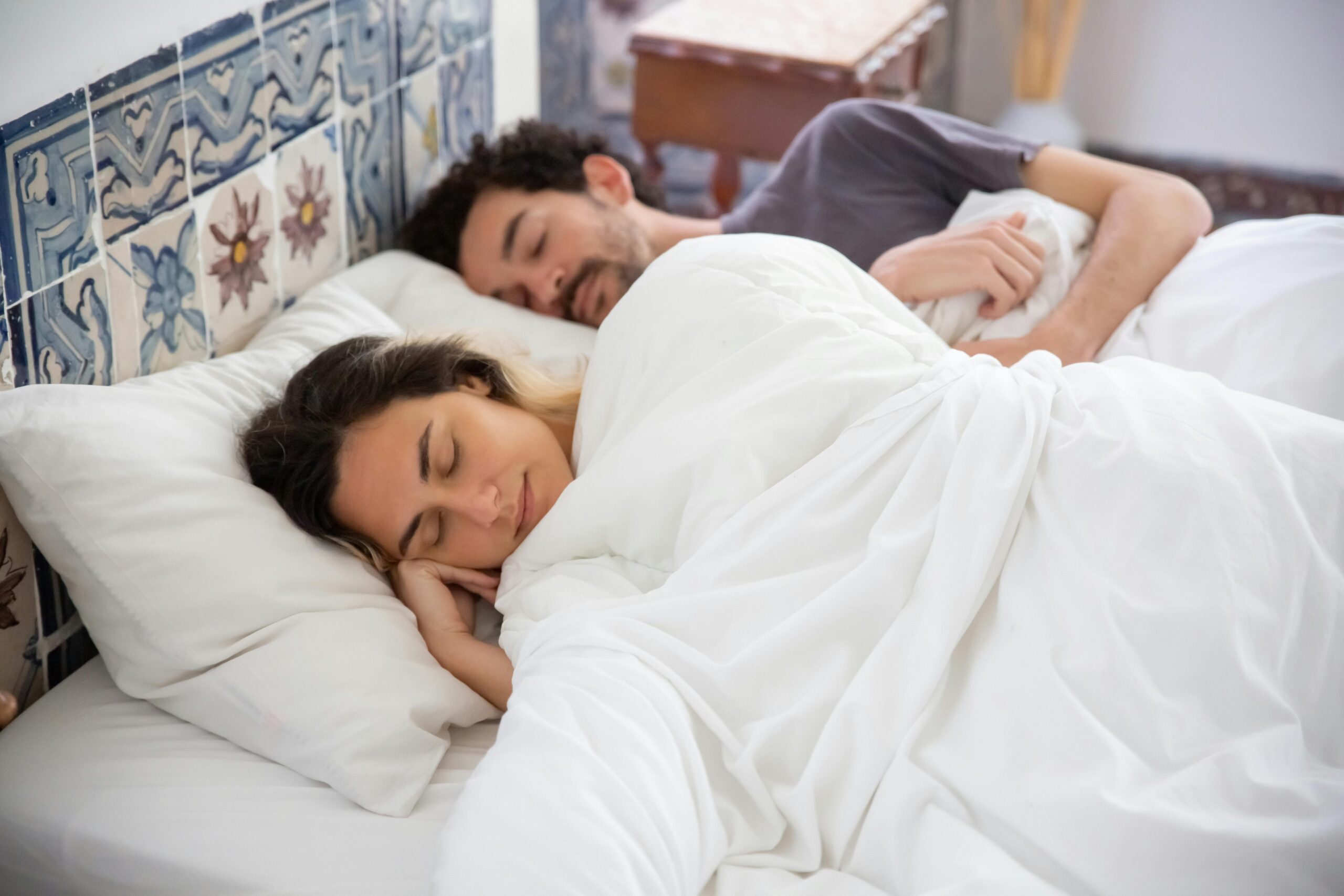
Of the “Big 3” physical wellness domains of Nutrition, Movement, and Sleep, my favorite one to talk about is sleep—mainly because it’s been instrumental for me. I can scrimp on the other two if needed and be alright for a while, but when my sleep is suffering, I feel it everywhere. And that makes sense, because sleep is the mechanism for your mind and body to restore, repair, and process what you’ve experienced each day. Scientific studies¹ tell us that we sleep in cycles each night, and that each cycle contains 5 stages, ranging from light/barely asleep to deep/totally knocked out sleep. This 5-stage cycle takes about 90-120 minutes, and ideally repeats several times until we reach at least 7 hours for the night.
Why We Need Good Sleep
Why are we talking about sleep? Because quality sleep is crucial for dealing with stress, building resilience, and growing/aging well. See this chart for a brief rundown of ways that sleep quality impacts your life and wellbeing:
Factor | Poor Sleep | Good Sleep |
Appetite | Faulty: You’ll crave sugary things because that sugar gives you a short energy boost; You’ll feel hungry when what you actually need is sleep to reboot your brain and muscles | Less “simple carb” cravings; More accurate hunger signals because your body isn’t asking for more calories (more energy) to stay awake/keep going |
Digestion | Sluggish; Bloated; Backed up/Irregular | Regulated; Can process food smoothly and absorb nutrients; Sustained energy levels |
Mood | Impatient; Irritable; Reactive; Moody/Negativity dominates | Patient; Less reactionary; Can more easily see positives/opportunity |
Cognition/Thinking | Foggy; Slow; Problem-solving takes longer; More errors/Inaccuracies; Decreased memory retention | More efficient and accurate; Improved memory retention |
Energy | Low or Sporadic (bursts of erratic energy and slumps of no energy) | Consistent; Resilient (can increase activity without wiping yourself out) |
Physical Fitness | Muscles unable to repair or build; May not notice gains from exercise and may even feel/become weaker or slower until muscles can rest to recover | Muscles can repair and strengthen; Will maintain gains from exercise |
The Three C’s of Good Sleep
With these things in mind, how do we get “good” sleep? Good sleep hits the three C’s: Circadian, Consistent, and Comfort.
“Circadian” means that your ideal/best sleep falls within your natural circadian (meaning sleep/wake) type. Are you naturally a morning person? A night owl? We can’t always get sleep that fits with our circadian rhythm, but as much as possible, we can aim to align our sleep with our body’s rhythm.
“Consistent” means keeping a rhythm and routine with our sleep. Your body likes predictability with the rest it gets. Make and keep patterns with your sleep: Same place, same time, same bedtime prep (shower, stretching, reading, etc). Keeping these routines lets your mind and body know “hey, we’re getting ready for sleep, time to wind down and clock out.”
“Comfort” means simply that you get better quality sleep when your body is comfortable. In general, our bodies prefer darkness and cooler temperatures. These environmental signals tell your body, “It’s nighttime now, this is when we rest.” Consider using blackout curtains, an eye mask, a fan, lowering the thermostat and/or using breathable bedding and clothing for sleep. Comfort also refers to noise, and each of us tends to differ in this regard. Some of us like dead silence, and others like “white noise” or background noise. Consider sleeping with soft earplugs if you like silence, and try a fan or white noise machine/app if you prefer background noise.
Reach Out
Need help with your sleep? Stress impacting your sleep cycle? Our therapists can help address these and more. Call or contact Revelations today and schedule an appointment with one of our therapists!
References
- Patel, A. K., Reddy, V., Shumway, K. R., & Araujo, J. F. (2024). Physiology, sleep stages. In StatPearls [Internet]. StatPearls Publishing. https://www.ncbi.nlm.nih.gov/books/NBK526132/
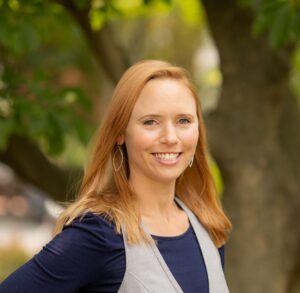
Heather Ulstad, MS MERP
Heather is a business operations director and mental health professional with a background in federal law enforcement, psychology, and forensic science. She enjoys high-paced environments and has worked alongside complex teams, with a steady focus on values-driven leadership, clear communication, and collaboration. In her counseling work, Heather integrates solutions-focused, relationship-centered, and trauma-processing approaches—often starting with early experiences to help clients better understand themselves and expand resilience, confidence, agency, and potential.
Outside of work, she values time with her husband and their two daughters, loves health and performance psychology and neuroscience, and is happiest exploring the mountains, forests, and new places with her favorite people.