







“Individual commitment to a group effort, that is what makes a team work, a company work, a society work, a civilization work.” —Coach Vince Lombardi
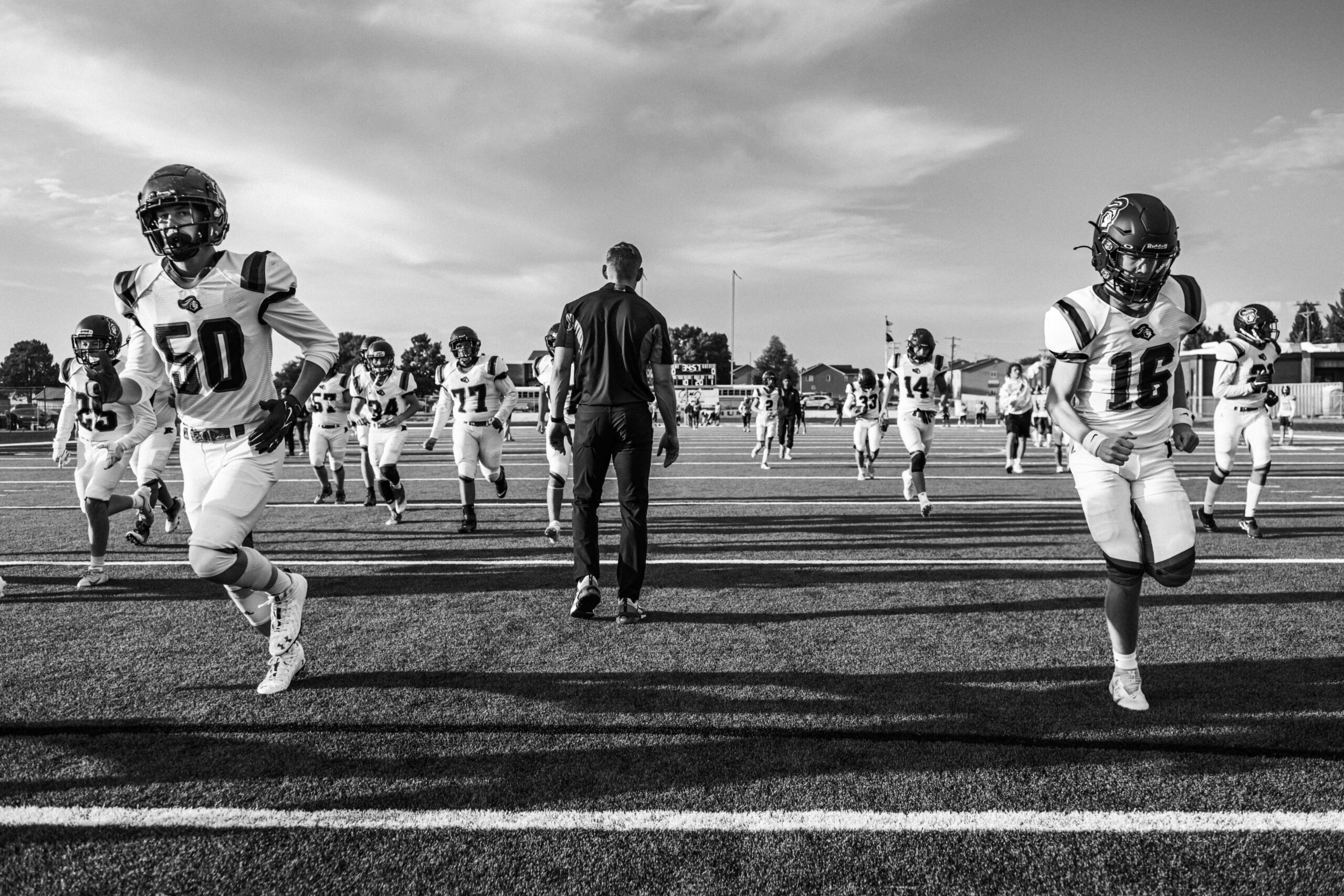
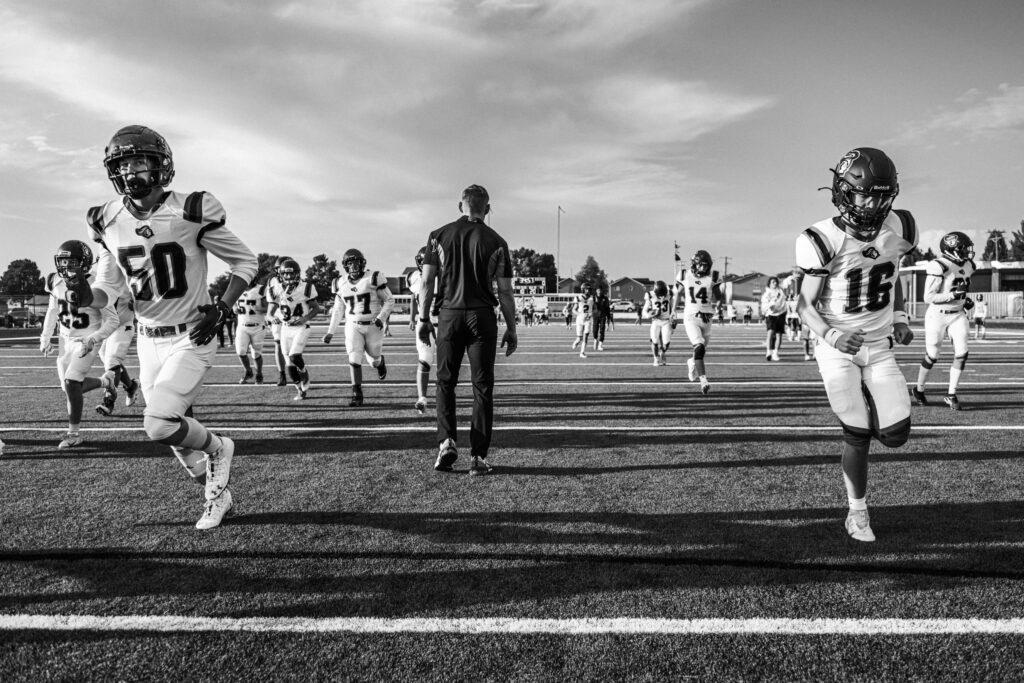
August is here, and that means only one thing to me—college football will soon kick off the 2026 season! I have what I believe is a healthy addiction to football. I acknowledge it, accept it, and I am unrepentant for it. I also know there are more than a few Revelations employees who share this obsession, although they may have different reasons for it. I love it because the quality of leadership and the intensity of preparation are what ultimately determine performance on the field.
Football is easily the most complicated sport in the world to organize and execute. College football is even more intriguing because it has the added challenge of inspiring, motivating, and earning the attention of 17-25-year-old players to get the most out of their talents. The game requires preparation and synchronicity of purpose for three teams playing in the same game: offense, defense, and special teams. The equipment requirements alone—which are necessary to ensure the safety of players—are absurd, and quite possibly the primary reason why no other country even attempts to replicate the game. I can’t even imagine what the World Cup of football would look like! It is the inimitable and transcendent American sport.
It is also a much more cerebral sport than the casual observer will appreciate. Strategic planning is necessary to develop a game plan that exploits an opponent’s weakness. There are complicated schemes in defensive alignments—for example, you will hear them described as a 3-4, 4-3, Nickel and Dime packages, a Cover 1, or a Tampa 2. If you watch a game and see the quarterback put his hands over the earholes of his helmet, he is likely listening to his offensive coordinator giving him the next play-call, perhaps saying something like, “Split Right Scat Right 639 F Angle.” There are at least 6 commands in that short statement that he needs to translate to the other players in less than 40 seconds to execute that play!
But no matter how well the game plan is structured, or how brilliant the schemes are designed, to be successful, you must know how to execute the fundamentals of blocking, tackling, and precise route-running on plays. You have to be dedicated to your individual fitness and build strength and speed that is specific to the position you play. On every snap of the ball, there is a lot going on—it is essentially a street fight at the line of scrimmage. But when it all comes together, I think it is the highest form of human performance art.
Leadership, coaching, and training are the non-negotiable and core tenets of success. Players have to believe in their coaches. Coaches have to earn that respect. This may be why there are so many leadership quotes attributed to legendary football coaches.
Vince Lombardi was the former coach of the Green Bay Packers from 1959 to 1967. The Super Bowl Trophy is named after him. He won two Super Bowls and never had a losing season as an NFL football coach. He was famously quoted as saying, “Individual commitment to a group effort, that is what makes a team work, a company work, a society work, a civilization work.”
Revelations has hundreds of employees, and like the three teams that comprise a football team, we have multiple teams organized around a single mission: “To empower the lives of every person entrusted to our care.”
This includes: treating patients in our clinical practice; assisting VA Caregivers with legal and financial services for their Veterans; helping military families and Veterans access quality healthcare; and serving wounded warriors with complex care needs. Executing these activities requires synchronicity. It requires diligence in planning, the support of our training and human resource divisions, and vigilance from our operations and IT team to ensure our people have everything they need to deliver value at the point of service.
It also requires experienced supervisors and managers who are dedicated to our employees’ success. These are Revelations coaches at the point of service who determine our success. If you have ever watched the 1993 movie, “Rudy”, then you know who Coach Ara Parseghian is. He was the coach who led the University of Notre Dame to two national championships in 1966 and 1973. He was credited with saying, “A good coach will make his players see what they can be rather than what they are.” Does that describe how we motivate our people to be the best at what they do?
Great football coaches, like all great leaders, believe in the spirit of “oneness” to accomplish great things.
To achieve this, it requires a heart for servant leadership, being invested in the people under your supervision and those you work alongside. Coach Paul “Bear” Bryant understood this. Bear Bryant was another exceptional coach for the Alabama Crimson Tide—and, no, I am most certainly not an Alabama fan. I do, however, value many of the quotes attributed to Coach Bryant and his philosophies on developing strong teams and a culture for winning. One of my favorites is: “If anything goes bad, I did it. If anything goes semi-good, we did it. If anything goes real good, then you did it. That’s all it takes to get people to win football games for you.”
Candidly, that is all it takes for a group of talented people to accomplish almost anything they set their minds to achieve. I love football because in the violence and chaos that comes with every snap, if that team has been successful in training, equipping, and leading—and if they inspire each other to greatness—there is beauty in the oneness of it all.
Every player on the field makes a huge difference. Evaluate what you still need today to be successful in what you are asked to do for the people we are privileged to serve. Seek the guidance of your supervisors and managers whenever you need to do so. Remember: If you see something wrong (even something average) and you don’t seek to correct it, then you just established the new standard. Support and encourage your teammates who are in the battle alongside you every day and don’t settle for anything less than excellence. In the oneness of it all, you will Discover Your Best!

Guy Strawder, LMFT, LPC, MHA
Guy Strawder is the CEO of Revelations Counseling & Consulting and one of the licensed psychotherapists at their clinical practice in Fredericksburg, Virginia. He has nearly four decades of leadership, operational, and policy experience in federal healthcare and private-sector consulting. A retired U.S. Army Lieutenant Colonel, Guy has served as senior military advisor to the Assistant Secretary of Defense for Health Affairs, is published in leading professional journals, and has presented to national commissions on wounded warrior care. He has earned multiple military and civilian honors, including the Defense Superior Service Medal and the Bronze Star Medal for his combat service in Operation Desert Storm. In addition to a Master of Arts in marriage and family therapy from Liberty University, he also holds a Master’s in Healthcare Administration from the University of North Carolina and was a board-certified medical laboratory scientist with the American Society of Clinical Pathology. He and Joanne, his wife and Revelations co-founder, have been married for 40 years, and they are blessed beyond measure by their three daughters, two sons-in-law, and two granddaughters.
Learn more about Guy and the rest of our leadership team at Revelations here.